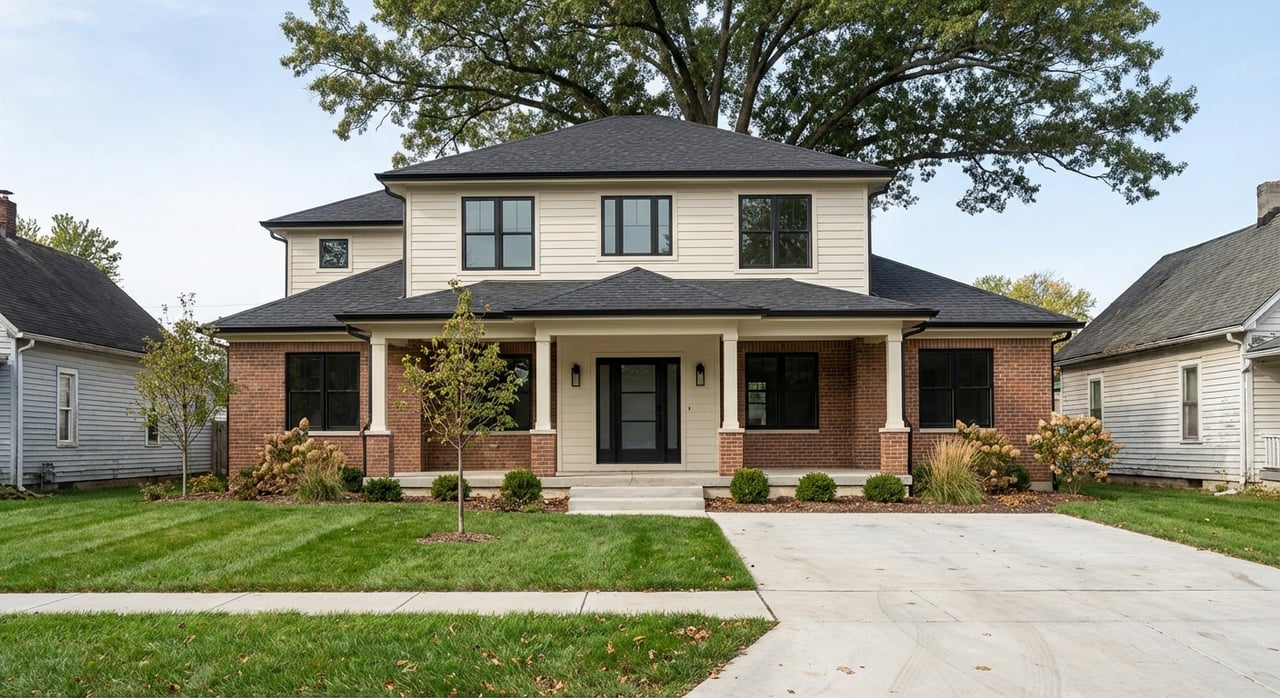
Thinking about building a brand‑new home or duplex on an in‑town lot in Iowa City? You’re not alone. Infill construction can unlock the exact layout and features you want, often in walkable neighborhoods where land is scarce. In this guide, you’ll learn how Iowa City handles infill, what to check on a lot, how permits work, realistic timelines, and what to budget. Let’s dive in.
What infill means in Iowa City
Infill construction means building on a vacant or underused lot inside city limits, not a new subdivision on the edge of town. Iowa City uses targeted tools, including form‑based standards in areas like the South District, to add “missing‑middle” options while shaping buildings to fit the neighborhood context. You can review the city’s approach in the overview of form‑based zones and standards.
Infill ranges from one new house or a duplex on a single lot to attached townhomes where alleys exist, and even larger projects in downtown zones. The key is understanding the rules that apply to the exact parcel you choose.
Where and what you can build
Confirm zoning first
Start with the parcel’s base zoning. The Unified Development Code sets what housing types are allowed, plus setbacks, lot width, height, parking, and overlay rules. Your specific allowances depend on the mapped zone and any special standards. You can find the zoning standards and tables in the city’s code library and then apply them to your lot.
RS‑5 and RS‑8 rules to watch
In many established neighborhoods, RS‑5 and RS‑8 zones allow attached two‑unit forms with design standards that affect what will fit. Common items include garage orientation, facade articulation, and potential reductions to interior side setbacks for shared walls. For narrower lots, the code may steer or require rear or alley access for vehicles. These details can shape your site plan before you ever draw a floor plan. See the applicable standards under RS‑district design rules.
ADUs and “plex” options
Accessory Dwelling Units are allowed as an accessory use in many contexts. The code defines ADUs, including applicability, size, and other standards, in the accessory use articles. Review the ADU definition and rules to understand the basics.
Iowa City considered updates in 2023 to expand where ADUs are allowed and to adjust some owner‑occupancy and parking requirements. Local coverage noted the council’s move to advance those changes, which may not be fully reflected on every code page yet. For the current rules, confirm details with staff and review the news on the ADU and duplex updates.
Historic and conservation overlays
Several older neighborhoods are within local historic or conservation districts. New construction there may require historic review, which can affect materials, massing, and project timing. If your lot is in or near a mapped district, plan for this step and check the city’s historic preservation resources.
How to pick the right lot
Use this simple lot‑vetting checklist before you write an offer:
- Zoning and overlays. Confirm the mapped zone and any overlays that apply, including form‑based areas and conservation or historic districts.
- Allowed uses. Verify whether your desired building type, such as a duplex or townhome, is by‑right or needs a variance or rezoning.
- Easements and access. Look for recorded utility easements and whether alley access is available or required on narrow lots.
- Floodplain status. Check if any part of the lot sits in a 100‑year or 500‑year flood zone. Flood status affects insurance, foundations, and permit needs. Start with the city’s floodplain information.
- Historic review. If the lot is within a local district, plan for design review and confirm hearing timelines using historic preservation resources.
- Utilities. Confirm water, sanitary sewer, storm, electric, and gas locations. The City’s Customer Self‑Service portal shows prior permits and is where you submit new applications.
- Survey and soils. Order a current boundary survey and, where soils are complex or near waterways, a geotechnical report. Site work and foundations often drive costs on small lots.
- Title and covenants. Check for private restrictions that affect building type, height, or materials.
- Fees and letters. Many lenders request a zoning confirmation letter. The city’s permit information outlines how plan review and permit fees are calculated.
Permitting and timeline in Iowa City
How permits flow
Most small infill projects follow a similar path:
- Optional pre‑application meeting with Planning staff to vet your concept.
- Land‑use approvals if needed, such as a variance or rezoning, which require public notice and hearings.
- Building plan submittal, plan review, and trade reviews via the City’s Customer Self‑Service portal.
- Permit issuance, inspections, and a final Certificate of Occupancy. You can find submittal requirements and fee details under permit information and fees.
Realistic timing
- Pre‑application feedback: about 1 to 4 weeks.
- Rezoning or variance (if required): often 6 to 16 or more weeks, depending on hearing cycles and any design changes.
- Plan review for a complete single‑family or duplex submittal: commonly 2 to 6 weeks, longer if revisions are needed.
- Construction of a typical detached infill home: many builders report about 6 to 12 months from breaking ground to final inspection, with custom or complex sites taking longer. National references support this range for standard builds based on typical costs and timelines.
Budget basics for infill builds
Hard costs you can expect
National averages for mid‑range new construction often cluster around 150 to 200 dollars per square foot. For Iowa City infill, a conservative planning range is roughly 130 to 220 dollars per square foot, depending on design, finishes, and site complexity. Narrow lots or challenging foundations can push toward the top of that range. For national context and calculator ranges, see typical cost per square foot.
Soft costs and fees
Include architecture and engineering, often 5 to 12 percent of construction cost. Add surveys, potential geotechnical borings, utility taps, permit and plan review charges, and construction‑period interest. The city explains permit and plan review calculations under permit information and fees.
Site work and utilities
Budget for demolition if needed, grading, foundation work, and service connections. On many infill lots, site work and utility hookups can run from the mid‑teens to several tens of thousands of dollars depending on conditions and access. Local builder bids will refine this number.
Contingency and price swings
Plan for a 10 to 20 percent contingency to cover unknowns such as underground conditions or code‑driven design changes. Material and labor markets have shown volatility in recent years, so carry a buffer for escalation. For market context, review national cost index trends that track swings in inputs and location factors, such as the RSMeans city cost index insights.
Example sketch budget
Here is a simple, non‑binding example to frame your pro forma:
- 1,600 square feet at 160 dollars per square foot: about 256,000 dollars in hard costs.
- Land: varies widely by block and lot size.
- Soft costs and fees: 10 to 15 percent of construction, about 25,000 to 50,000 dollars in this example.
- Site work, foundation, and utility connections: 15,000 to 60,000 dollars depending on conditions.
- Contingency: 10 percent, about 30,000 dollars.
Your final total depends on land price, design choices, and any special approvals. Use at least two local builder bids to dial this in.
Build new or buy existing?
- Time to move in. Buying an existing home is usually the fastest path to occupancy, while building requires months for approvals and construction.
- Cost comparison. Add land, hard and soft costs, and contingency, then compare to recent resale values in your target area. In some neighborhoods, infill will pencil as a premium for customization.
- Customization. Building lets you set layout, energy features, and finishes to your needs, or include a legal ADU if allowed on your lot.
- Permitting risk. Historic review, floodplain status, narrow frontage, or variance needs can add time and risk. Check flood status early using the city’s floodplain information.
- Rental potential. If you plan to rent, verify local rental permit and inspection requirements, and test expected rent against your all‑in costs.
Your next steps
- Pull the parcel’s zoning and overlays, then request a zoning confirmation letter if a lender or partner will require it.
- Use the City’s Customer Self‑Service portal to check prior permits and start pre‑application or plan submissions.
- If the lot sits in a historic district or mapped floodplain, contact those city staff early for guidance and likely conditions.
- Get at least two builder budget checks, including a local infill‑experienced GC who understands narrow‑lot site prep and access.
- If you want a duplex or ADU, ask Planning staff how current rules apply to your parcel and whether any owner‑occupancy or parking standards are in force.
- Line up a current survey and, if soils are uncertain, a geotechnical report.
- Build a pro forma that includes land, hard and soft costs, fees, contingency, and timeline carry, then revisit it after you receive city feedback.
Work with a team that builds and brokers
Infill projects move faster when your real estate and construction partners work as one. The Williams Team combines brokerage insight with an integrated construction capability, so you can source the right lot, vet zoning, budget accurately, and keep permits and build steps on track. If you are weighing a new build vs. buying, or you want a second opinion on a specific Iowa City lot, let’s talk about the smartest path for your goals.
Ready to plan your project? Connect with Tara Williams for a pressure‑free consult.
FAQs
What is “infill new construction” in Iowa City?
- It means building a new home or small multi‑unit on a vacant or underused lot inside city limits, guided by standards like the city’s form‑based zones to fit neighborhood context.
Can I build a duplex or add an ADU on my RS lot?
- It depends on your exact zoning and parcel; review the ADU rules in the code and ask staff about recent policy updates noted in local coverage.
What design rules affect small infill lots?
- In RS‑5 and RS‑8 zones, attached units have standards for garages, facade articulation, and side setbacks; see the RS‑district design section for details.
How long do permits take for a single new home?
- Plan for 2 to 6 weeks for plan review once you submit complete drawings, plus any time for required variances; construction commonly takes 6 to 12 months for a standard build, per typical national ranges.
Do I need historic approval to build?
- Only if your lot is in a local historic or conservation district, where new construction typically requires review; check the city’s historic preservation resources.
How do I check flood risk for a lot?
- Start with Iowa City’s floodplain information to see if the site lies in a mapped flood zone, which can affect design, insurance, and permits.